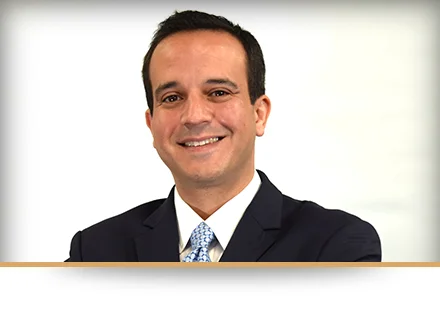
Diego Bustillos
Founding Partner
BBA Immigration · Houston, Texas
For professionals building a life here, and for the companies hiring them.
Here is how I explain my job on the first call.
You are my product. I need the government to buy you.
That sounds blunt. It is meant to. An officer you will never meet decides the case from paper alone, applying a specific legal standard while working through a heavy caseload. That officer has to see, quickly, who the person is, what they built, why it matters, and how the evidence meets the law.
I practice law. I do not sell promises.
That distinction matters because a petition carries more than a government filing. It carries where someone lives, where they work, the company they want to build, and often the direction of a family's life. When a company files it, the petition also carries a role that has to be filled and a project that cannot wait.
I came to the United States as an immigrant. I know the moment a government file stops being paperwork and turns personal. That experience shaped how Adriana Bello and I built BBA Immigration around three commitments: tell the truth, understand the client deeply, and present the evidence so clearly that the officer can see what makes the case strong.
Clarity is kindness. I would rather tell you something hard today than let you find it out from the government in fourteen months.
A smiley face and the Mona Lisa
Both show a smiling face. Both are accurate. They do not communicate with the same depth.
A petition works the same way. The facts already exist. Our work is to uncover what those facts mean, test them, organize them, support them with evidence, and present the strongest truthful version of the case.
A petition is a short thesis on one subject: the person at the center of it.
I want the first pages to give the officer a reason to keep reading.
The BBA framework
Every petition this firm files runs on the same framework. We built it, we train our associates on it, and it does not change when the caseload does.
Two pieces do most of the work.
The Vega structure governs the attorney letter. It sequences the legal argument so the officer meets the conclusion first, then the governing standard, then the evidence that satisfies it, and closes each element before opening the next. An officer should never have to hunt for the answer to a question the letter just raised.
The adjudicator study governs what goes in. We read published decisions, approvals, and denials to learn what the officer actually looks for, what they skip, and what makes them stop and issue a request for evidence. We call the result our adjudicator profile, and it does one job: it filters noise. Most petitions fail because they bury four strong facts under sixty weak ones. The profile tells us which sixty to cut.
I did not build the framework because I enjoy process. I am the opposite of a process person. I built it because a standard that lives in one lawyer's head is a standard the firm loses the day that lawyer is on a plane. Writing it down is what lets Carolina, Daniela, Estefanía, and Martina hold the line without me in the room.
If you are the professional
You already did the work. The petition has to make an officer see it.
We learn your field first. We ask about your profession, your technology, your research, and your results until we can explain them in plain language without stripping away the sophistication. Clients regularly discover their own expertise in these conversations. One project manager emailed asking for his money back because he believed his job was too ordinary to qualify. He mixed cement, he said. Twenty minutes of questions later he was explaining a chemical supply chain spanning twenty sources that all have to arrive at once or the well fails. He had never heard himself say it out loud.
We test the case before the government does. We measure every claim against the standard the officer applies and tell you where the case is thin while there is still time to fix it.
We write it. No templates. No volume mill.
I handle EB-1A extraordinary ability and EB-2 National Interest Waiver petitions for engineers, physicians, technology professionals, researchers, executives, and artists, along with O-1 and E-2 matters.
If you are the employer
You have a role to fill and a candidate who cannot start, or a person already on your team whose status runs out on a date you can name. The immigration process is not the problem you wanted this quarter.
Our job is to take it off your desk and give you a date you can plan around.
One point of contact, and a calendar. You get the sequence, the decision points, and the moments we need something from you, in the first meeting rather than the fourth.
Your obligations, stated up front. What the company must pay and what it cannot ask the employee to repay. What the recruitment file has to show. What ability to pay means in practice and which documents prove it. Employers get into trouble on these points more often than on the merits.
A real answer about which path fits. Labor certification, H-1B, L-1, EB-1C, O-1, or a national interest petition the company files on the employee's behalf. Sometimes the answer is that sponsorship is the wrong tool and we say so. We recently told a client to stop paying for a second-phase labor certification because the expected benefit no longer justified the cost.
When the standard route is closed, we build another one.
A construction company had four months to keep a program coordinator the projects depended on. But another firm's labor certification for the role had already been denied. Therefore the ordinary employer-sponsored route was gone, and the employee's immigration posture narrowed the remaining options further. Therefore we built a hybrid: an employer-filed national interest petition, supported by a recruitment file we assembled to labor certification standards even though the category did not require one. That record let us show the officer directly that no U.S. worker was displaced, which is the question the third element of the national interest test actually asks. The petition was approved inside the window. The company kept the coordinator.
Adriana Bello leads most of our employer work. She trained at Baker & McKenzie and at Shell, so she has sat on the company side of this table. Read Adriana's bio
What actually keeps me up
People assume the hard part of this job is losing. It is not.
The hard part is being wrong about something I could have checked. A fact I took at face value. A weak link I saw and did not press on. An argument that sounded good in my office and falls apart in front of an officer who reads petitions all day.
That is why we test the case against the standard before the government does. It is why we tell you where the file is thin while there is still time to fix it. And it is why I will not put a number on your odds that I cannot defend.
What I can promise, and what I cannot
I cannot promise an approval. No honest immigration lawyer controls what the government decides. Possible and probable are different words, and I use them carefully.
I can promise the part we control: the preparation, the research, the strategy, the writing, the candor, and the care.
Cases are won with the truth. Always.
When I sign a petition, I want the person at the center of it to read it and think:
“That is my story. I just never knew how to explain it that clearly.”
One more thing you should know
If my wife or one of my children calls, I could be talking to a head of state and everything stops.
My family taught me what loyalty means: when someone places something important in your hands, you treat it as important. Every client who trusts BBA Immigration with a decision that can change the course of a life gets that same standard. So does every company that trusts us with a hire.
One conversation, and you will know where you stand
The best time to start was ten years ago. The second best time is today.
Book the call. I will tell you what I see, including the parts you will not enjoy hearing.
Not ready to talk yet? Read our guide to the EB-2 National Interest Waiver or follow @diego.visas, where I answer the questions clients ask me every week.
Credentials and admissions
Diego Bustillos is the Founding Partner of BBA Immigration in Houston, Texas. He holds an LL.M. in Global Energy, International Arbitration and Environmental Law from The University of Texas School of Law and a law degree from Universidad Católica Andrés Bello. He is admitted to practice law in New York and Venezuela. His practice is limited to federal immigration law before U.S. Citizenship and Immigration Services, the U.S. Department of Labor, the U.S. Department of State, and the immigration courts. He began his career at Norton Rose Fulbright. He practices in English and Spanish.
Prior results do not guarantee a similar outcome. Every case turns on its own facts.
Request a Consultation
Ready to discuss your immigration case? Our team is here to help guide you through every step.
Request a Consultation📞 281-503-1455Contact Info
Phone
281-503-1455Meet Our Team
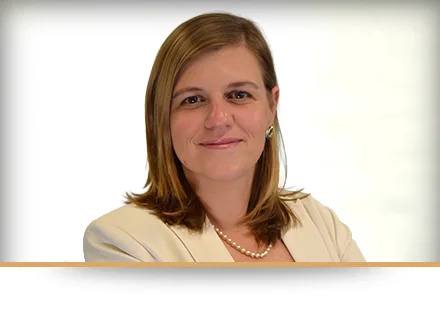
Adriana Bello
Founding Partner
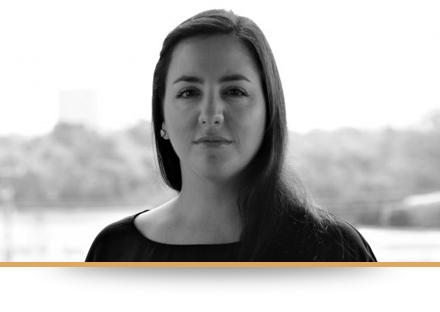
Patrizia Papaianni
Associate

Maria Agostina Biritos
Foreign Associate
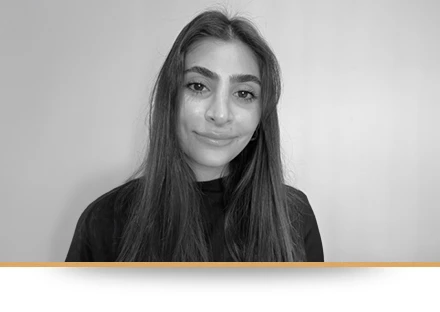
Reina Kargodorian
Foreign Associate

Martina Lagos
Foreign Associate

Christian Rodriguez
Foreign Associate
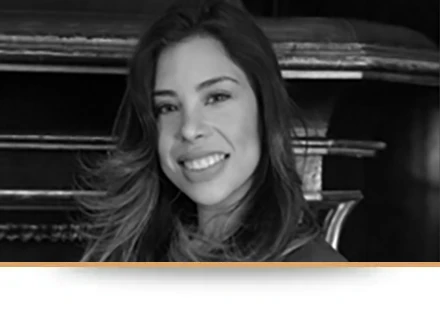
Carolina Taddeo
Foreign Associate

Michael Urbina
Of Counsel
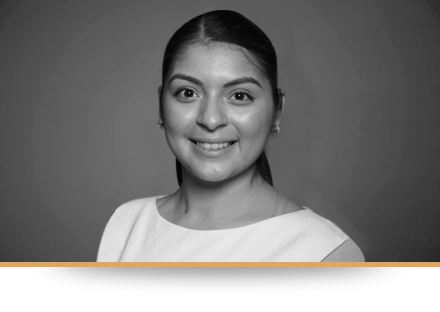
Yesenia Maldonado
Paralegal
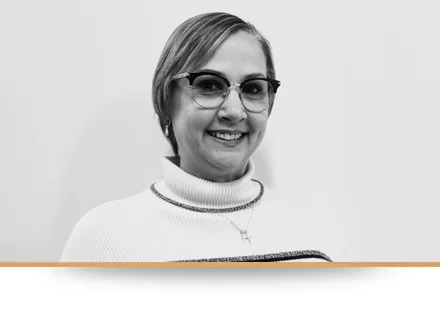
Hortensia Gomez
Paralegal